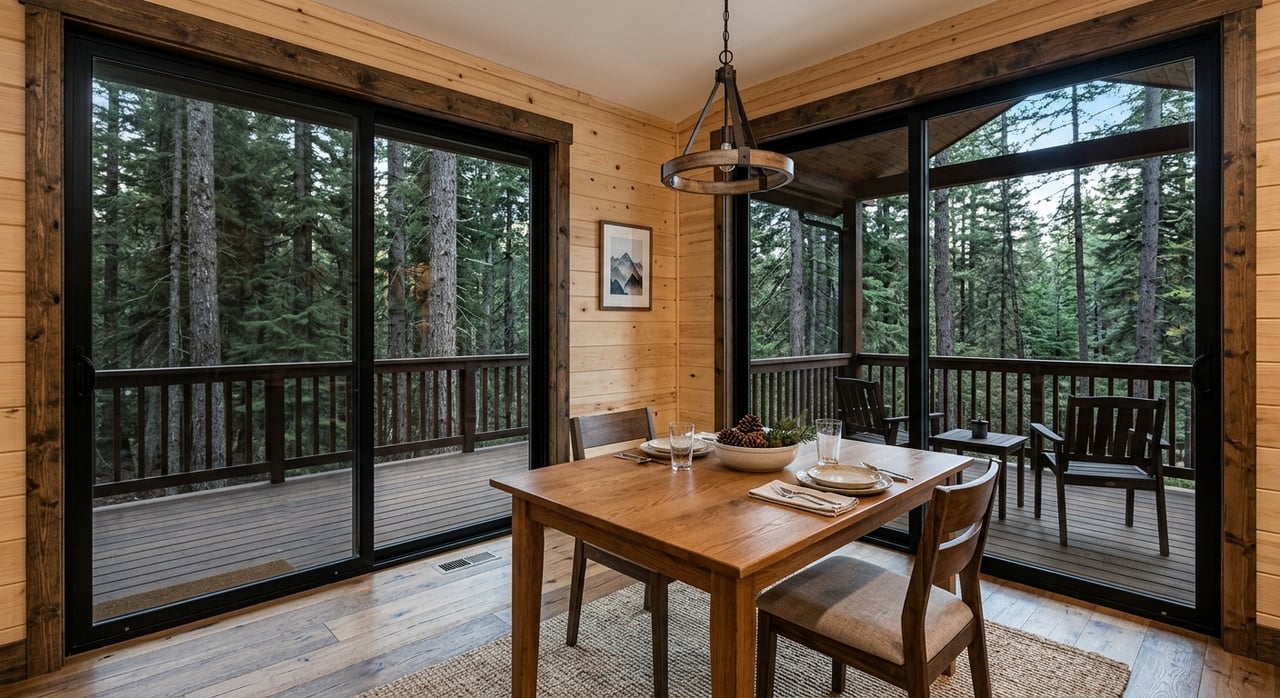
If you have ever looked at a Big Bear Lake vacation rental income estimate and thought, "That seems either too good or too vague," you are not alone. This market can reward the right property, but it does not perform the same way every month, and broad averages can hide a lot. If you want to read vacation rental performance with more confidence, this guide will help you understand the numbers that matter and how to use them before you buy. Let’s dive in.
Why Big Bear Lake performance looks different
Big Bear Lake is a seasonal resort market, not a flat year-round one. According to Big Bear’s official tourism guidance, the two peak seasons are winter, from Thanksgiving to March, and summer, from Memorial Day to Labor Day.
That matters because a property here should be judged by its monthly pattern, not just one annual average. A cabin that looks average on paper may actually depend on a handful of strong winter and summer months to carry the year.
The local visitor economy also supports that pattern. A City of Big Bear Lake economic report noted that tourism is a major driver and that nearly one million visitors came in 2021, mostly during those peak winter and summer periods. In plain terms, the calendar is part of the investment story.
Start with the three core KPIs
When you review a Big Bear Lake vacation rental, three metrics usually come first: occupancy, ADR, and RevPAR. Together, they give you a better picture than annual revenue alone.
Occupancy shows booking pace
Occupancy is the share of available nights that get booked. In Big Bear Lake, third-party dashboards show different market averages, which is normal because they use different listing pools and formulas.
For example, AirDNA’s Big Bear Lake overview reports 4,328 properties with 33% occupancy, a $441.4 ADR, and $144.9 RevPAR. Other data providers cited in the research show occupancy ranging from 28.8% to 37%.
The takeaway is simple: do not treat one dashboard screenshot as the final answer. In this market, low-to-mid 30s occupancy may be a useful directional range, but serious buyers should still look at address-level comps.
ADR shows pricing power
ADR stands for average daily rate, or the average nightly price on booked nights. This tells you how much demand is willing to pay when your property is occupied.
In Big Bear Lake, ADR tends to strengthen during the winter holiday period and can also improve during summer. Official tourism data identifies winter and summer as the two peak seasons, while third-party reporting says February and December are among the busiest months.
That means pricing power can be just as important as occupancy. A property that books fewer nights but commands stronger winter rates may outperform a lower-priced listing that stays busier but earns less per reservation.
RevPAR connects bookings and revenue
RevPAR, or revenue per available rental night, helps you see how efficiently a property turns available nights into income. It combines occupancy and rate into one number.
AirDNA reports Big Bear Lake RevPAR at $144.9. That figure is helpful for market context, but it is most useful when you compare a subject property to similar homes with a similar bedroom count, home type, and stay rules.
Read seasonality before you trust annual revenue
Seasonality is the main story in Big Bear Lake. If you skip that step, it is easy to overestimate a property’s consistency.
Peak months carry the year
According to Big Bear’s tourism information, visitors come heavily during winter for snow-related travel and during summer for mountain weather and warm-season recreation. Because Big Bear is also an easy-drive destination for Southern Californians, weekends and holiday periods can play an outsized role.
Third-party reports support that same pattern. Airbtics’ Big Bear Lake revenue analysis identifies February and December as busy months, and referenced revenue ranges show high-season monthly revenue around $4,875 to $5,750 compared with lower months near $2,027.
So if a listing’s annual projection looks strong, ask what is actually carrying it. In many cases, a few high-value months do much of the work.
Shoulder months deserve close attention
The most resilient vacation rentals are not just strong in peak season. They also hold up reasonably well in slower periods.
When you underwrite a property, look at whether it can stay occupied enough in shoulder months while still capturing strong winter pricing. That is often a better test of durability than looking at a top-line annual revenue estimate alone.
Check whether the home fits the market
A vacation rental performs best when it matches what guests already book in that area. In Big Bear Lake, listing fit matters.
AirDNA’s market breakdown shows that 96% of listings are entire homes, and 3-bedroom homes make up the largest segment at 34%. It also reports that the most common minimum stay is 2 nights for 56.2% of listings.
That suggests the core product in this market is a whole-home, family-size cabin with a weekend-friendly booking setup. If you are comparing properties, make sure you compare ones that serve a similar guest use case.
Gross revenue is not your cash flow
One of the biggest mistakes buyers make is stopping at projected gross income. In Big Bear Lake, you need to build local taxes, licensing, and operating costs into the analysis from the start.
Big Bear Lake taxes affect every month
For properties within the City of Big Bear Lake, the current lodging tax load is 13% of gross receipts, made up of 10% TOT plus 3% BBLTBID. The city also requires filing every reporting period, even if there is zero income, with payment due by the last day of the following month.
This is a major underwriting line item. If you skip it, your projected returns may look better on paper than they do in practice.
Licensing and compliance are part of the business
The City of Big Bear Lake also has specific vacation rental rules and costs. The current transient private home rental registration fee is $605, renewal is annual, and the inspection and registration process can take 2 to 4 weeks.
The city also requires liability insurance, annual certification for many owners and agents, and posting the license if the home is advertised or rented. Advertising without the required permit or license number can trigger a $2,500 fine.
There is one small offset worth noting. The city offers a $150 license-fee credit for an approved sound-monitoring system.
Day-to-day costs still matter
Beyond city rules, you still need to budget for the normal costs of operating a rental property. According to IRS rental property guidance, common rental expenses include insurance, utilities, and repairs.
You should also account for mortgage payments, property taxes, cleaning, maintenance, supplies, property management, platform fees, and the replacement of furniture and appliances over time. In a guest-facing property, those costs are not optional. They are part of staying competitive.
Use the right comp set
A good Big Bear Lake analysis starts with apples-to-apples comparisons. Market-wide averages can be useful for context, but they should not replace a custom property review.
Confirm the jurisdiction first
Big Bear Lake rentals must be in zip code 92315 to fall under the city’s transient private home rental rules. The city notes that homes outside that area fall under San Bernardino County registration, which can change the compliance framework.
Before you compare performance, make sure the properties are in the same jurisdiction. A comp outside the same rule set can distort your underwriting.
Match the right property features
For the most useful comparison, line up these factors:
- Same jurisdiction
- Similar bedroom count
- Similar home type
- Similar minimum-stay rules
- Similar guest appeal and seasonal use
That is especially important in Big Bear Lake, where rate and occupancy can vary meaningfully by layout and use case.
A simple way to read performance
If you want a plain-English test, ask three questions:
- Can the property hold enough occupancy in slower months?
- Can it command strong rates in winter and summer?
- Can it still cash flow after the city’s 13% lodging tax, licensing costs, and normal operating expenses?
If the answer to all three is yes, you may be looking at a stronger opportunity. If not, the revenue headline may be doing more work than the property itself.
That is where a local, property-level analysis becomes so valuable. Big Bear Lake is not a market where one screenshot tells the whole story.
If you are comparing cabins, second homes, or short-term rental opportunities in Big Bear Lake, working with a local team can help you read the numbers in context and avoid costly assumptions. The team at SoCal Resorts Group can help you evaluate fit, seasonality, and ownership considerations with a practical, on-the-ground perspective.
FAQs
What does occupancy mean for a Big Bear Lake vacation rental?
- Occupancy is the share of available nights that are booked, and in Big Bear Lake it should be read alongside seasonality because winter and summer demand are much stronger than slower months.
What does ADR mean for a Big Bear Lake short-term rental?
- ADR means average daily rate, which is the average nightly price on booked nights, and it helps you measure how much pricing power a property has during busy periods.
What does RevPAR tell you about a Big Bear Lake cabin?
- RevPAR shows how well a property turns available nights into revenue by combining occupancy and nightly rate into one metric.
Why are Big Bear Lake vacation rental averages different across dashboards?
- Different data providers use different samples, active-listing counts, and methods, so market averages are best used as directional context rather than final underwriting.
What taxes apply to a vacation rental in Big Bear Lake city limits?
- For city properties, the current lodging tax load is 13% of gross receipts, which includes 10% TOT and 3% BBLTBID, with required monthly filing.
What should you compare before buying a Big Bear Lake vacation rental?
- You should compare the same jurisdiction, bedroom count, home type, and minimum-stay rules so you are evaluating truly similar properties.