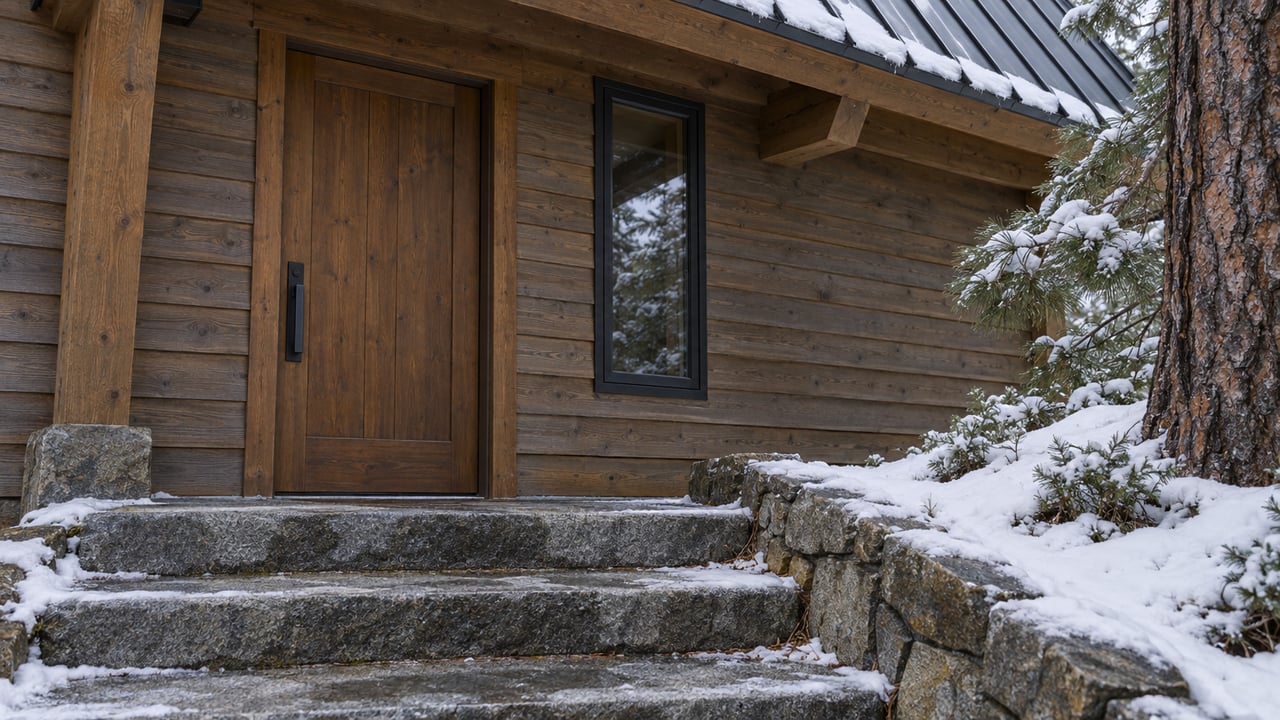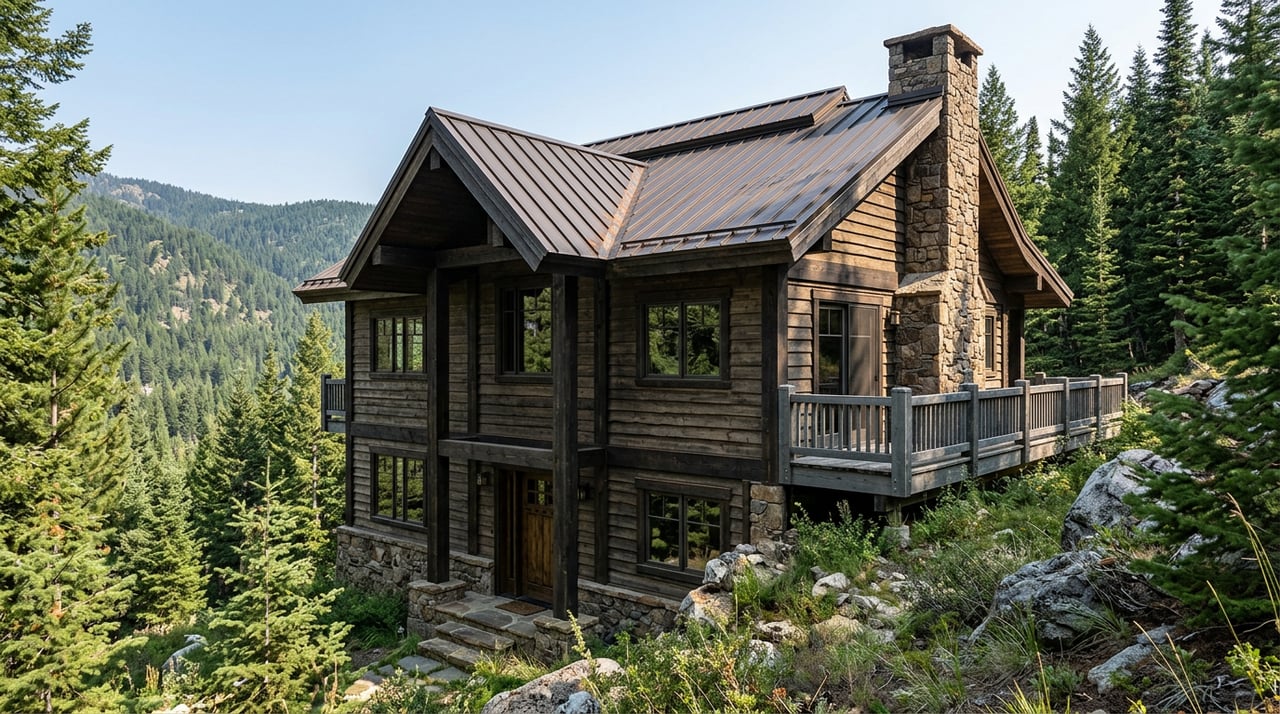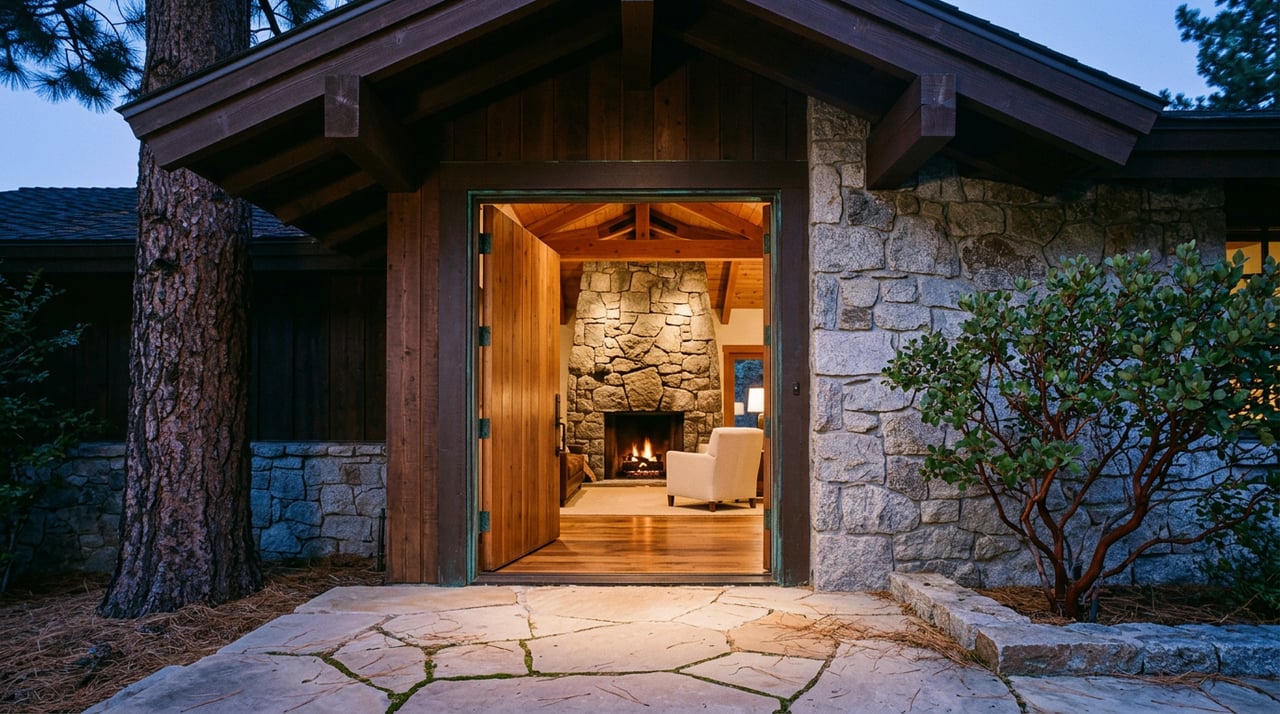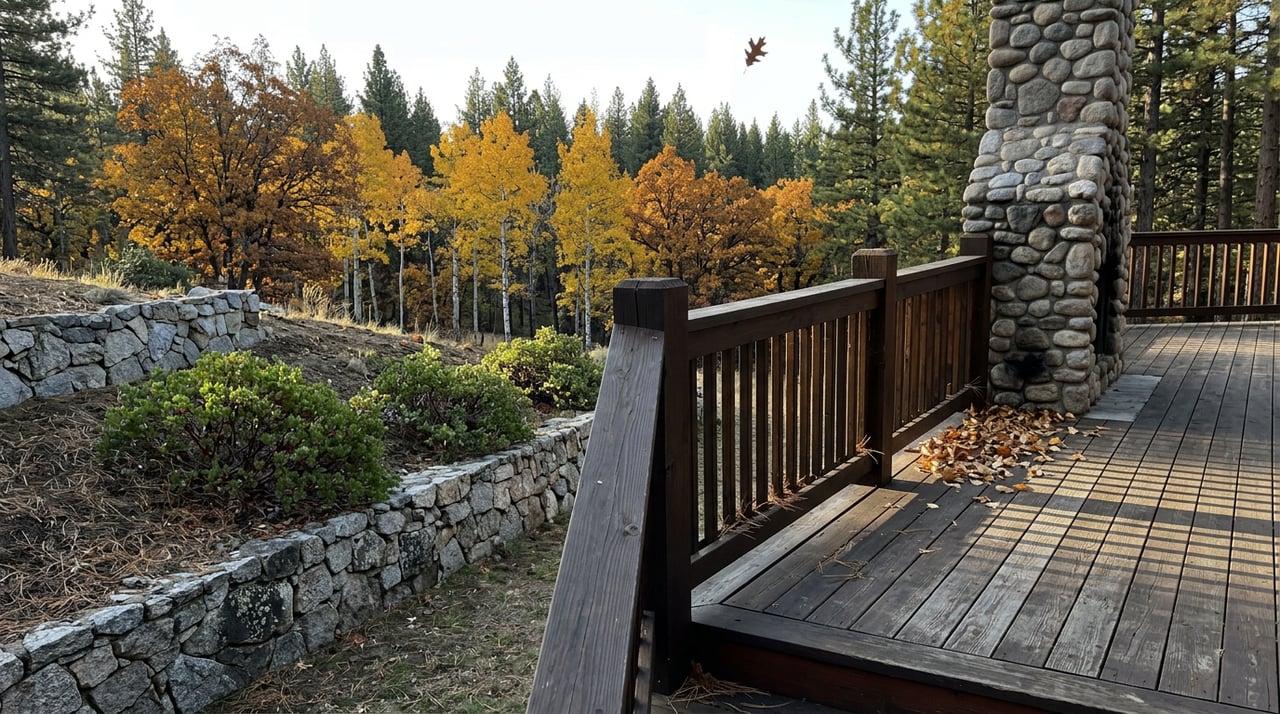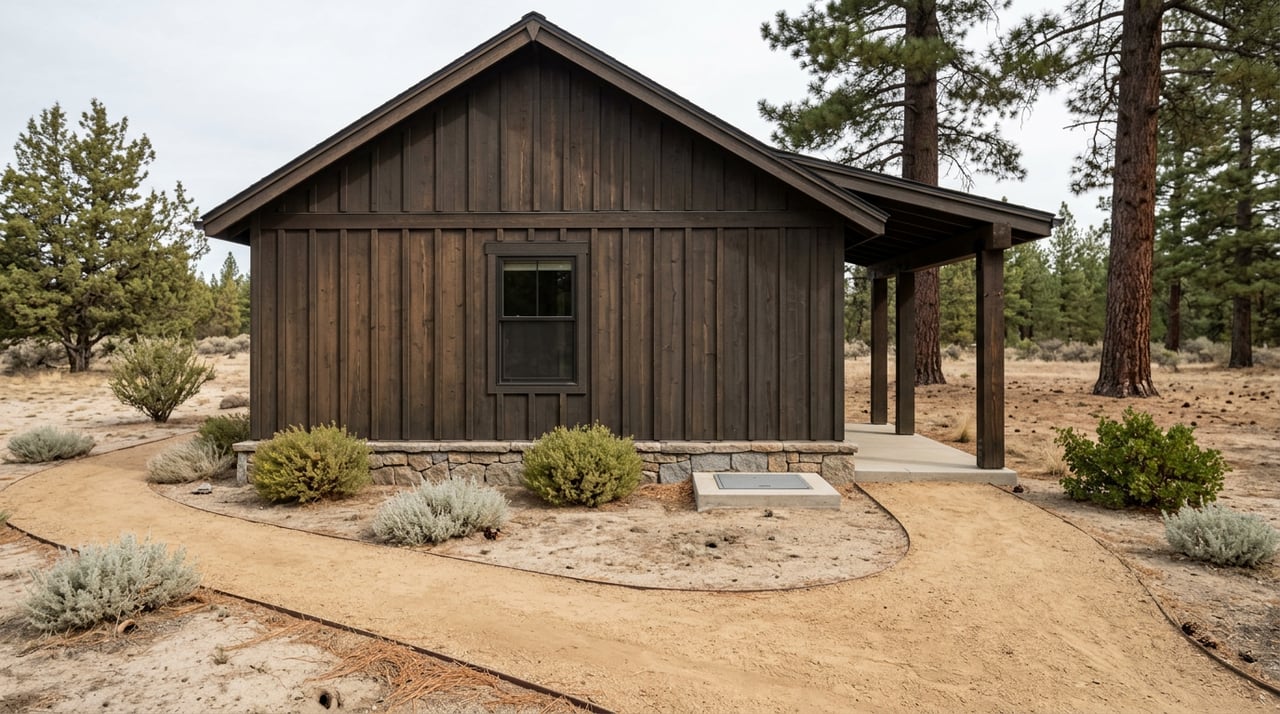
Two cabins on the east end of the valley, both listed a hair under the July 2026 median. Same square footage, same 1970s bones, same charcoal composition roof, same distance to Big Bear Boulevard. On the portal they read as comps. In escrow they behave like different asset classes, and the difference is a line running under the street that neither listing photo shows.
That line is the Big Bear City Community Services District sewer main. On one side of it, a sale closes on the timeline a buyer expects. On the other side, San Bernardino County Environmental Health Services has to sign off, a licensed C-42 contractor has to dig, and a leach field older than the current owner suddenly becomes a price negotiation. In a market carrying 12.6 months of inventory as of July 15, 2026, that is not a footnote. It is the negotiation.
Two Cabins, Two Transactions
Here is the same $425,500 median sale price viewed through the utility grid instead of the MLS.
| Feature | On CSD Sewer | On OWTS (Septic) |
|---|---|---|
| Wastewater | Piped to BBARWA treatment plant via 116 miles of CSD mainline | Tank + leach lines on the parcel |
| Point-of-sale requirement | Standard California disclosures | C-42 inspection required before transfer, plus SB County EHS OWTS Permit / Transfer of Ownership application |
| Typical inspection cost | Part of general home inspection | $300 to $900, more with pumping |
| Downside exposure | Sewer lateral repair | Leach field replacement $10,000 to $30,000+ |
| Ongoing County oversight | None specific | Every-other-year EHS inspection under the mountain OWTS agreement with Lahontan RWQCB |
| Where you tend to find it in 92314/92386 | Big Bear City core, portions of Sugarloaf and Erwin Lake within CSD boundaries | Baldwin Lake, outer Erwin Lake, Whispering Forest, Lake Williams pockets |
Both cabins can be a good buy. They are not, however, the same buy. That is the argument the rest of this post makes.
Why This Matters More In August 2026 Than It Did A Year Ago
The Big Bear City housing report from CRMLS data pegged 69 single-family closings over the 90 days ending July 15, 2026, at a $425,500 median and $349 per square foot, with a median of 100 days on market, 289 active listings, and 12.6 months of inventory. Sale-to-list averaged 97.7%, and 10.1% of homes closed above asking. Zillow's parallel read as of June 30, 2026 put the average Big Bear City home value at $395,087, down 5.8% year over year.
Translate that from "market data" into "what happens at the kitchen table." When inventory sits at nearly a year of supply and homes take three months to sell, buyers stop chasing. They inspect. They request repair credits they would have waived in 2022. A septic finding that would have been swallowed by a hot market in 2021 is now a live line item. The 97.7% sale-to-list ratio is misleading if you read it as strength. It is the number after price reductions and after septic credits already got baked in.
The Transfer Sequence That Catches Out-Of-Area Buyers
For any Big Bear City home on an on-site wastewater treatment system, the following has to happen before escrow closes. This is the piece that surprises buyers arriving from Orange County and the South Bay, where sewer is the default assumption.
- Locate the tank. If the seller cannot point to it, the inspector charges more to probe and map.
- Book a C-42 licensed inspector. California law requires the inspection be done by a licensed contractor, and San Bernardino County maintains standards through the Environmental Health Services division.
- Pass the flow test and structural check. Inspectors verify inlet and outlet fittings, tank integrity, and look for the tell-tale dark-green grass or shifted vegetation that signals a leach field problem.
- Disclose in the Transfer Disclosure Statement. California requires the seller to disclose known septic issues in the TDS. Concealed defects have generated real lawsuits.
- File the OWTS Permit / Transfer of Ownership application with SB County EHS. The existing permit does not follow the tank to the new owner. This is the step every out-of-area buyer's attorney asks about after they read the escrow file.
- Confirm compliance with mountain-specific rules. Seepage pits are not permitted in the San Bernardino Mountains. Only leach lines. If a legacy pit shows up on the map, that is a conversation.
A septic system that passes inspection and has clean pumping records is a $500 line item. A septic system with a failing leach field is a $20,000 negotiation. In a buyer's market, the buyer keeps most of that.
What The Same Median Buys In Different Corners of 92314 And 92386
The eastern valley is not one market. Zip codes overlap in ways that make MLS filters lie a little.
Big Bear City core (92314). Most parcels inside CSD sewer boundaries. Cleanest transaction path. The 92314 zip also contains Erwin Lake, Baldwin Lake, Whispering Forest, and Lake Williams, so a search filtered only by zip mixes true sewer-served inventory with rural septic parcels. Confirm the service address against the BBCCSD water and sewer boundary before you assume anything.
Sugarloaf (92386). Elevation around 7,096 feet. Subdivided in the 1940s when the lots were sold as campsites, which is why the parcels are so tight and the driveways so short. Roughly two of every nine households sit as full-time occupancy per historical census; the rest are vacation homes. Sugarloaf Fire Station 284, Baldwin Lane Elementary, and Big Bear High School anchor the community, with Kallan's Bar & Grill and Easy's General Store serving as the local corner. Utility coverage is mixed, and some Maple Lane winter-ice quirks show up in every February inspection report.
Erwin Lake. Mostly full-time residents, most residential roads still dirt, few short-term rentals. Storms tend to be milder than the west end of the valley, but response times for medical calls run longer. Emergency service comes primarily out of Sugarloaf Station 283.
Baldwin Lake. The Baldwin Lake Ecological Reserve, 156 acres of pebble plains habitat, sits east of Big Bear City. Parcels here are larger, more rural, high-desert-influenced. Almost all septic. Baldwin Lake Stables is the recognizable anchor. This is where the price-per-square-foot number in a portal search looks tempting and where the septic diligence matters most.
How To Read A Listing In This Zip Code Without Getting Fooled
Three checks the average out-of-area buyer skips.
- Look at the sewer field on the MLS detail, not just the description. "Public sewer" means CSD. "Septic" or "OWTS" means the transfer sequence above.
- Ask for pump receipts. Leach fields typically last 15 to 25 years. Without records, a buyer's due-diligence math has to assume the low end of that range, which changes the offer.
- Verify the trash setup. Big Bear Disposal serves 92315 (the incorporated City of Big Bear Lake). Unincorporated Big Bear City, Erwin Lake, and Sugarloaf are on the CSD trash grid. Baldwin Lake residents haul to the County transfer station on Holcomb Valley Road, which is either free with a dump card or a per-load fee. That $85.14 annual County solid waste assessment is real and worth knowing before you write an offer.
FAQ
Does a septic system make a Big Bear City home harder to finance? Conventional financing accepts septic. The friction is diligence and disclosure, not underwriting. Where it does matter is FHA and VA appraisals, where the appraiser can call out visible septic issues that then require repair before funding.
If the seller had the tank pumped last month, do I still need an inspection? Yes. Pumping is maintenance. A C-42 inspection evaluates the tank structure, the leach lines, and system flow. California law ties the inspection to the transfer, not to the maintenance schedule.
Can a Baldwin Lake property connect to the CSD sewer? In most cases the mainline does not reach that far, and extending it is a private cost that rarely pencils against the value of a single home. Buyers should plan on the OWTS being the permanent wastewater solution and price accordingly.
What To Do With This Before You Write An Offer
The softness in the Big Bear City market through mid-2026 is real, but it is not evenly distributed. Cabins on CSD sewer trade closer to the median with fewer contingencies. Cabins on aging septic systems in the outer 92314 zip trade with more days on market and more room to negotiate, and the buyers who understand that are the ones getting the price adjustments.
If you are working out whether a specific address sits on sewer or septic, or whether the leach field on a property you are eyeing has the years left to justify the list price, that is the conversation to have before the inspection contingency, not during it. Reach out to the team at SoCal Resorts, and we will walk the parcel, pull the utility record, and tell you what the listing photos do not.