Running the numbers on a Running Springs cabin and not sure whether cap rate or cash-on-cash is the better guide? You are not alone. Mountain rentals can look great on paper until winter storms, wildfire insurance, and variable occupancy start moving your returns. In this guide, you will learn what each metric really measures, how to calculate them correctly, which one to lean on for cabins in Running Springs, and how local factors can shift your outcome. Let’s dive in.
Cap rate explained
What cap rate measures
Cap rate is the unleveraged yield of a property. The formula is simple: cap rate equals Net Operating Income divided by purchase price or current value. It shows how efficiently the asset converts income into return independent of financing.
What counts in NOI
NOI is your effective rental income minus operating expenses, before any mortgage payments or taxes. Include property taxes, insurance, utilities that you pay, routine maintenance, management fees, marketing, HOA dues, platform fees for short-term rentals, and reserves. Exclude loan principal and interest, income taxes, and depreciation.
When to use cap rate
Use cap rate to compare cabins on an apples-to-apples basis and to gauge market pricing. It is helpful when you buy all cash or want to understand the asset’s baseline yield without the impact of financing.
Limits to keep in mind
Cap rate ignores leverage and the timing of cash flow. It is also sensitive to how you estimate NOI, which matters for short-term rentals that have month-to-month volatility in occupancy and nightly rates.
Cash-on-cash explained
What cash-on-cash measures
Cash-on-cash return shows your annual pre-tax cash flow relative to the total cash you invested. It reflects your leveraged result after debt service.
The formula in practice
Start with NOI. Subtract annual debt service, which is principal plus interest, to get pre-tax cash flow. Divide that by the total cash you put in, including down payment, closing costs, and initial capital expenses or reserves.
When to use cash-on-cash
Use cash-on-cash when you plan to finance and need to see the cash yield on your invested dollars. It is also the right tool for comparing different down payments, interest rates, and loan products.
Limits to keep in mind
Cash-on-cash is a pre-tax measure and does not count tax benefits, appreciation, or principal paydown unless you separately model them. It is highly sensitive to financing terms and one-time setup costs.
Why both matter in Running Springs
Running Springs is a drive-to mountain community for Southern California visitors, which supports strong weekend and holiday demand. That said, winter and summer peaks create seasonality that shifts revenue and expenses month by month. Cap rate helps you compare cabins on unleveraged yield. Cash-on-cash shows your real cash return after financing, which can swing quickly with interest rates, occupancy, insurance, and snow costs.
How to calculate both, step by step
Build realistic income first
- Short-term rental: estimate average daily rate times projected occupancy times days available, then adjust for seasonality.
- Long-term rental: use expected monthly rent times 12.
Convert to effective income
- Subtract vacancy and turnover time.
- For short-term rentals, include platform fees and any concessions.
Deduct operating expenses
- Property taxes, insurance, utilities you pay, routine repairs and maintenance.
- Management fees, landscaping, snow removal, trash, HOA dues, reserves for maintenance and replacements.
Compute each metric
- Cap rate: NOI divided by purchase price or value.
- Cash-on-cash: NOI minus annual debt service, divided by your total cash invested.
Local costs that move your numbers
Snow and winter maintenance
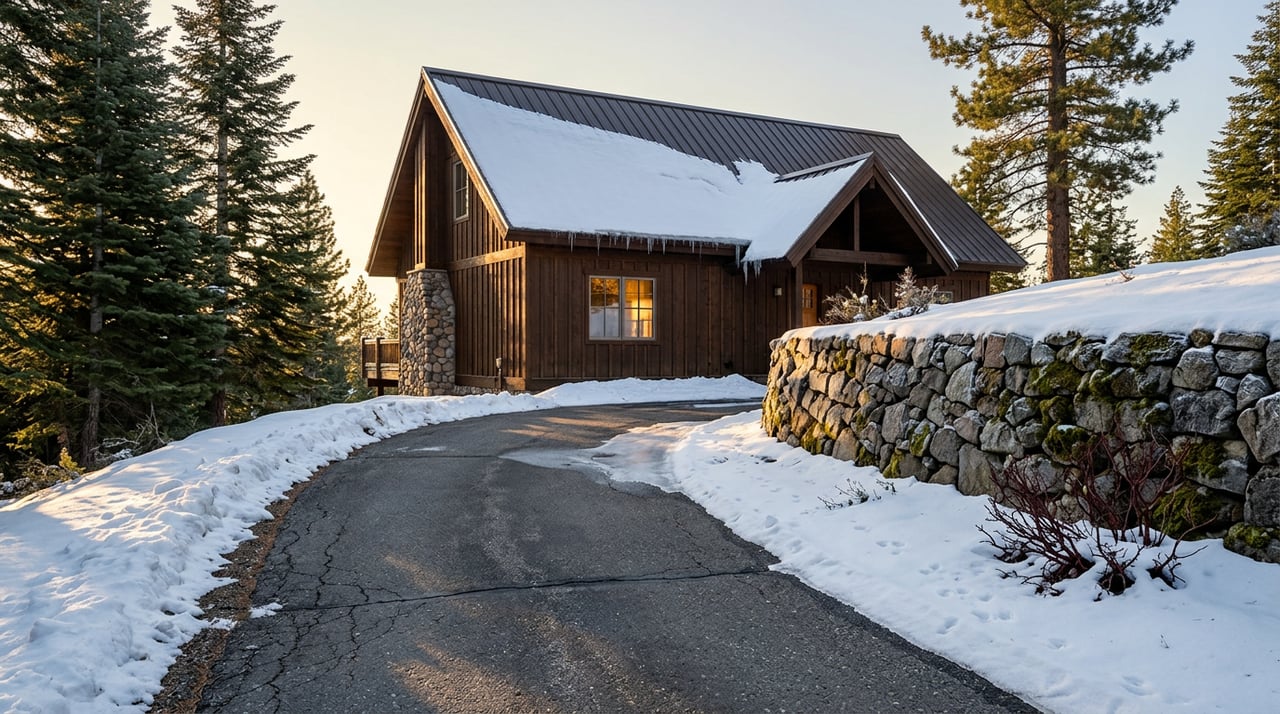
Snow removal, driveway plowing, and road access repairs can add meaningful expense. Steep or long driveways may need special equipment or paid services, especially after big storms.
Wildfire mitigation and insurance
Creating defensible space, brush clearance, and fire-resistant improvements can be recurring items. Insurance premiums can be higher in mountain and wildfire-exposed areas, and coverage may be limited. Getting local quotes is essential.
Utilities and septic or well
Some cabins use septic or wells. Budget inspections, pumping, and reserves for repairs. Off-grid or semi-off-grid setups can increase maintenance and capital needs.
Management, cleaning, and supplies
Short-term rental management often ranges higher than long-term. Add regular linens, turnover cleans, and guest supplies to your operating lines.
Driveway and private road costs
Private road associations and steep driveways may require periodic maintenance or assessments. Include a reserve for resurfacing or repairs.
Regulations and taxes to confirm
Running Springs is unincorporated within San Bernardino County. Short-term rentals generally require permits and compliance with county rules. Transient Occupancy Tax typically applies and reduces net revenue, so plan for it in your projections. California property taxes are governed by Proposition 13, which sets a base property tax rate around 1 percent of assessed value plus local levies and can trigger supplemental taxes at purchase. Lenders and insurers may require wildfire mitigation measures. Check any HOA or community rules that may restrict short-term rental use.
Which metric to prioritize
- Use cap rate to compare unleveraged income potential between cabins and to sanity check pricing.
- Use cash-on-cash if you will finance and want to understand your actual cash yield after debt service and setup costs.
- The practical approach is to compute both. Show conservative, likely, and optimistic scenarios for occupancy and nightly rate. Add interest rate sensitivity. This gives you a view of asset quality and your investor-level return.
Example: one cabin, two views
Below is a simple hypothetical to show how the metrics differ. These numbers are for illustration only.
- Purchase price: 400,000
- Projected annual NOI after operating expenses and before debt: 30,000
- Cap rate: 30,000 divided by 400,000 equals 7.5 percent
- Financing: 25 percent down, annual debt service 20,000
- Pre-tax cash flow: 30,000 minus 20,000 equals 10,000
- Total cash invested: 110,000, which includes down payment, closing costs, and initial setup
- Cash-on-cash: 10,000 divided by 110,000 equals 9.1 percent
What this shows: the asset’s unleveraged yield is 7.5 percent, while the leveraged cash yield to you is 9.1 percent given the assumed loan. Change interest rates, occupancy, or nightly rate and the cash-on-cash figure will move more than the cap rate.
Build scenarios and sensitivities
Stress test your model before you write an offer. Run these variations to see where cash-on-cash may tighten:
- Nightly rate down 10 percent and occupancy down 10 percent for a short-term rental.
- Insurance premiums up 20 percent due to wildfire exposure.
- Management and turnover costs up 5 to 10 percent with a higher-service manager.
- Interest rates up 1 to 2 percentage points, which increases annual debt service.
Checklist: data to gather
- Purchase price assumptions and closing costs.
- Assessed property tax details and any supplemental taxes.
- Rental income data: ADR by month and occupancy by month for short-term, or current rents and comps for long-term.
- Utility responsibilities and average costs.
- Insurance quotes that include wildfire and short-term rental liability where applicable.
- HOA dues and any CC&Rs that affect rental use.
- Management fee structure for short-term compared with long-term.
- Reserve allowances for roof, septic or well, driveway, and snow equipment.
- Required initial capital items such as furnishings or repairs for a short-term rental.
- Local taxes and fees such as transient occupancy tax, business licenses, and permits.
- Financing terms including down payment, rate, fees, and amortization.
- Local risk factors such as winter road closures and wildfire evacuations.
Common pitfalls to avoid
- Relying on list price instead of your negotiated price in the cap rate calculation.
- Overestimating occupancy and nightly rates and ignoring seasonality.
- Leaving out snow removal, wildfire mitigation, higher insurance, and septic or well reserves.
- Forgetting transient occupancy tax and permit costs for short-term rentals.
- Mixing cap rate and cash-on-cash without stating your financing and expense assumptions.
How to apply this in Running Springs
Start with cap rate to compare cabins across neighborhoods and price points. Next, build a monthly short-term rental calendar with high and shoulder seasons to dial in revenue, cleaning, and supplies. Get real quotes for insurance and snow services. Then model cash-on-cash under different down payments and rates so you can see how your financing choice affects cash flow.
If you are considering a long-term rental strategy, use market rent comps and lower variable costs, then compare that cash-on-cash with your short-term rental projections. This side-by-side view helps you decide which path fits your goals and risk tolerance.
Work with an integrated local team
Mountain properties reward local knowledge and disciplined modeling. With multigenerational roots and a vertical hospitality arm, our team can help you source real quotes for insurance and snow services, validate ADR and occupancy assumptions through local property managers, and map each cost line item to a real vendor. We also guide you through financing classifications such as second home versus investment property, and we coordinate pre-purchase inspections for septic or well where relevant.
Ready to run scenarios on a specific cabin or to compare returns across Running Springs, Lake Arrowhead, and Big Bear? Connect with the SoCal Resorts Group to get a practical, investor-focused game plan tailored to your goals.
FAQs
What is the difference between cap rate and cash-on-cash for cabins?
- Cap rate shows unleveraged yield based on NOI and price. Cash-on-cash shows your leveraged cash return after debt service divided by your total cash invested.
How do short-term rental costs in Running Springs affect returns?
- Snow removal, wildfire insurance, cleaning and supplies, and higher management fees raise operating expenses, which reduces NOI and can lower both cap rate and cash-on-cash.
Which metric should I use if I plan to finance a Running Springs cabin?
- Use both. Cap rate compares asset quality. Cash-on-cash shows your actual cash yield under your loan, down payment, and setup costs.
What should I include in NOI for a short-term rental cabin?
- Include property taxes, insurance, utilities you pay, routine maintenance, management fees, platform fees, HOA dues, landscaping, snow removal, trash, and reserves. Exclude mortgage payments and income taxes.
Do local rules and taxes change cash-on-cash for short-term rentals?
- Yes. County permits and transient occupancy tax reduce net revenue. Confirm San Bernardino County requirements and any HOA restrictions before relying on projections.